

Do we control the system? Or does the system control us?
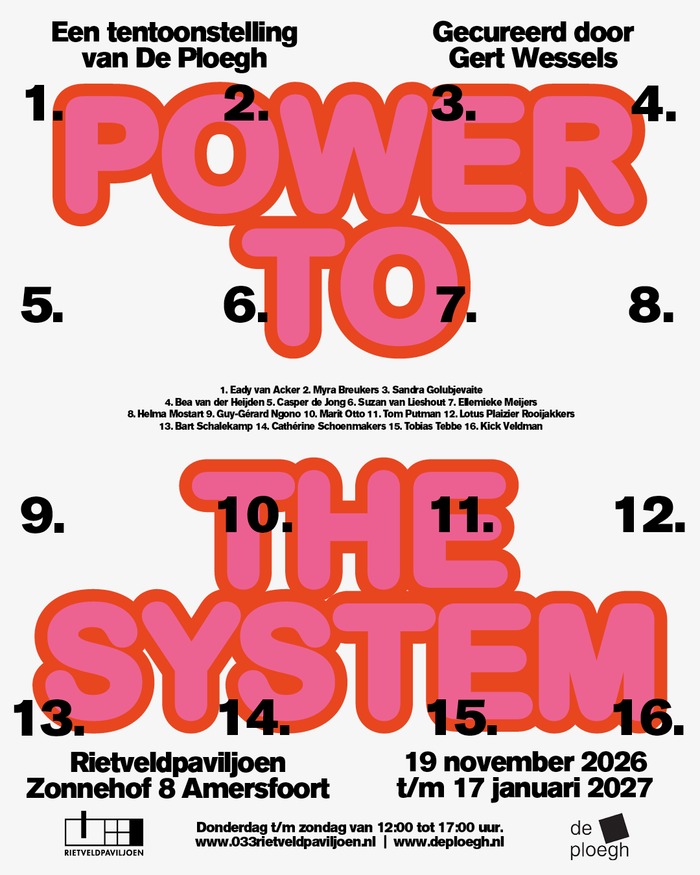
Exhibition: POWER TO THE SYSTEM | November 19 through January 18 | Rietveld Pavilion, Amersfoort.
A system stands for order. Clarity. Overview. Predictability. Control.
Until the system does something we didn’t expect. It is just then that change and imagination find room to emerge.
“Power to the System” explores the ways in which systems shape our lives—and how we try to shape the systems. From human structures and technology to ecosystems and biodiversity. These systems enable our existence, but can also limit it.
De Ploegh and guest curator Gert Wessels jointly designed the exhibition. They brought together sixteen artists and created a landscape of artworks that function as self-contained systems while also forming relationships with one another and with the Rietveld Pavilion. Closed circuits, chain reactions, patterns, and fragile balances reveal how systems emerge, function, influence one another, and sometimes go off the rails.
In this context, the relationship between humanity and nature takes on special significance. Biodiversity forms the basis of our natural environment, yet it is under increasing pressure. What happens when human systems and ecosystems collide? How much control do we truly have?
“Power to the System” does not provide ready-made answers. The exhibition invites visitors to recognize patterns, question existing structures, and take a fresh look at our place within the systems of which we ourselves are a part. No answers, but new ways of thinking and new perspectives.
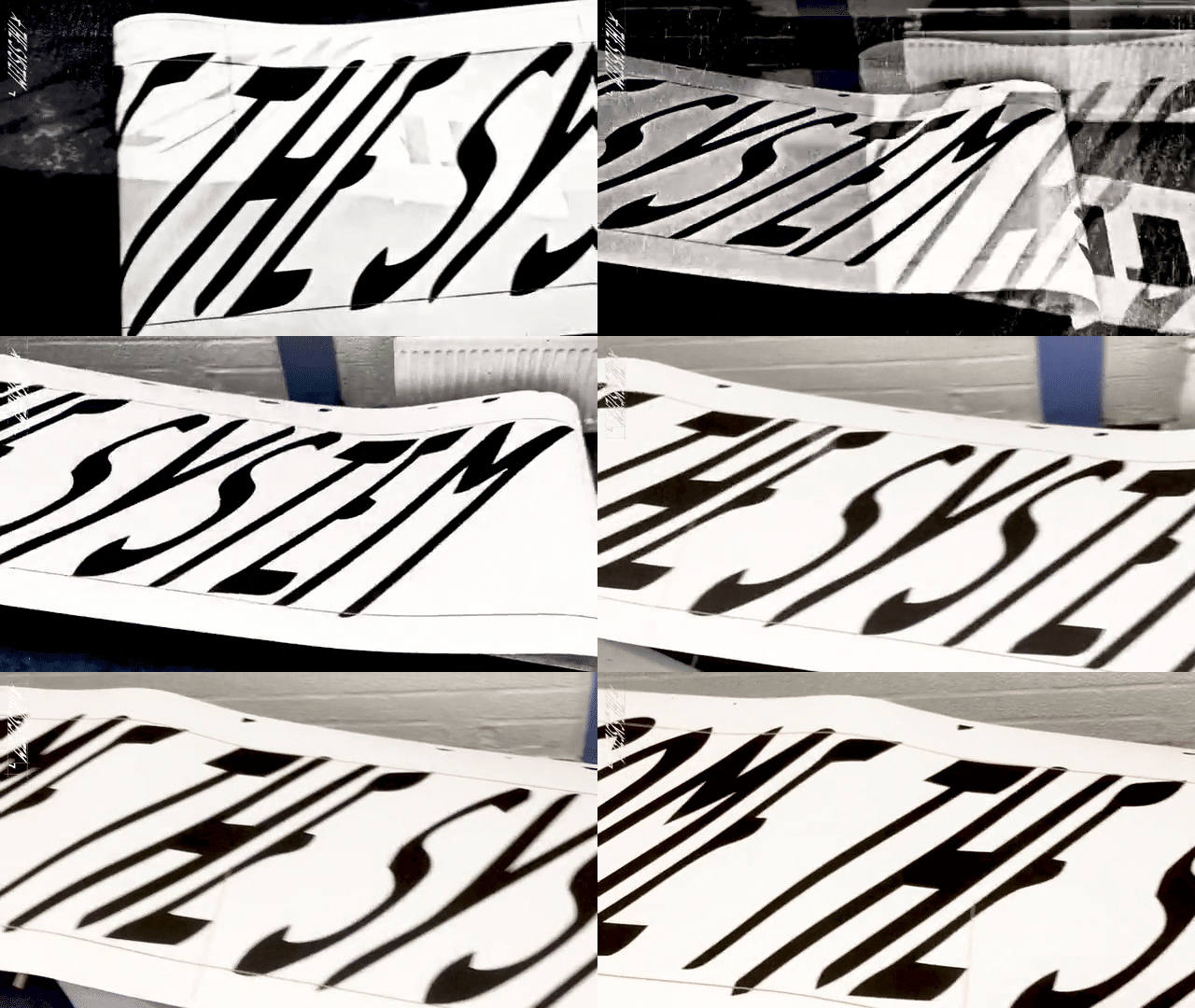
My contribution to this exhibition is * The System, a digitally created and printed, hand-painted text on the window of the Rietveld Pavilion’s facade and a floor graffiti piece featuring the same text * The System
Overig deelnemende kunstenaars:
Eady van Acker
“Boom” reflects on the cycle of life, death, and decay. Ultimately, everything returns to the earth.
Myra Breukers
Through her work, she invites us to look at our surroundings differently and to reexamine familiar perspectives.
Sandra Golubjevaite
It constructs and examines technical systems while simultaneously demonstrating that these systems are never fully efficient, closed, or controllable.
Niels van Haaften
Creates an algorithm-generated route through the exhibition, based on the project texts of the participating artists.
Bea van der Heijden
She creates “Water Bearers” from recycled paper. Her work demonstrates how differences and diversity can make a system resilient.
Casper de Jong
Takes technology out of its familiar context. In ARCHIVING CASPER, unnoticed selfies reveal daily patterns and our relationship with digital systems.
Suzan van Lieshout / Van Lieshout IV
Explores our constant hunger for growth and improvement. In Kalfknuffel and Zuiggordel, that fascination takes on a physical form.
Ellemieke Meijers
“Kantoor des antwoords” focuses on existential questions. A playful installation in search of help, answers, and wisdom.
Helma Mostart
Vertaalt inspiratie uit het gedicht Toen de nacht van Rutger Kopland naar monumentale houtskooltekeningen over licht, nacht en onzichtbaarheid.
Guy-Gérard Ngono / Guyzo
Translates inspiration from Rutger Kopland’s poem “Toen de nacht” into monumental charcoal drawings about light, night, and invisibility.
Tom Putman
It combines elements from different worlds. His excavator bucket offers a perspective on nature and technology that is both futuristic and medieval.
Lotus Plaizier Rooijakkers
Gives existing objects a new function and meaning. In the large installation Brandslang, familiar forms become part of a new system.
Bart Schalekamp
Explores the playfulness and unpredictability of systems. His installation Tij kolkt raises questions about water management, control, and social engineering.
Catherine Schoenmakers
She builds using felt bricks she developed herself from natural materials. She combines textile techniques with ideas about building, protection, and shelter.
Tobias Tebbe
Depicts, in detailed ink drawings, a political system of his own devising in which power, identity, and ideology converge.
Kick Veldman
Using ICEBOX, investigate what is needed for a refrigerator to operate completely independently. Historical technology meets questions about energy and infrastructure.
Hours: Thursday through Sunday from 12:00 p.m. to 5:00 p.m.
Admission: Adults: €5 (includes 1 coffee or tea); Youth up to age 18 | Friends of 033rietveldpaviljoen: free.
The Museum Card is not valid here.
Rietveldpaviljoen Zonnehof 8, 3811 ND Amersfoort 033rietveldpaviljoen.nl >